10 Fun Coloring Activities to Do at Home with Kids After School
10 Fun Coloring Activities to Do at Home with Kids After School
The after school hour is one of the most challenging parts of a parent’s day. Children arrive home tired, overstimulated, and emotionally depleted from a full day of learning and socializing. They want to decompress — but screens leave them more wired, not less. Snacks help for five minutes. And then the chaos begins.
Coloring activities are one of the most effective solutions to the after school transition problem. They are calm without being boring. They are engaging without being stimulating. They give children something satisfying to do with their hands while their minds quietly settle from the busyness of the school day.
These 10 fun coloring activities go beyond just handing a child a coloring page. Each one is a creative experience that children genuinely look forward to — and that parents can enjoy alongside them.
Why After School is the Perfect Time for Coloring
The science of children’s stress responses helps explain why coloring works so well after school.
After a full school day children’s cortisol levels — the stress hormone — are elevated. They have been managing social dynamics, concentrating on learning, following rules, and suppressing their natural impulse to move and play freely. When they arrive home they need to discharge this accumulated tension in a healthy way.
Screens discharge tension too quickly and replace it with more stimulation, making the eventual wind-down harder. Physical activity is excellent but not always possible. Coloring sits in a perfect middle ground — it is gentle enough to be calming but engaging enough to hold attention and prevent boredom.
The rhythmic repetitive motion of coloring specifically activates the parasympathetic nervous system — the body’s natural rest and recovery mode — helping children transition from school mode to home mode naturally and gently.
The 10 Activities
Activity 1 — Story Coloring
What it is: Choose an animal or character coloring page and before coloring ask your child to make up a short story about the character on the page. Who is this animal? What is their name? What adventure are they having today? After the story is told color the page together.
Why it works: Story coloring transforms a simple coloring activity into a rich language and imagination exercise. Children who have just spent a day absorbing information at school love the freedom of making something up entirely on their own terms. The story gives them ownership of the page before they even pick up a crayon.
Best pages to use: Animal coloring pages, character coloring pages, fantasy coloring pages — anything with a single main character that can easily become the hero of a story.
After school bonus: Ask your child to include something from their school day in the story. What happened at recess today? Let’s put that in the story. This gentle debrief technique helps children process their day without it feeling like an interrogation.
Activity 2 — Color Your Feelings
What it is: Print a simple emotion character coloring page or a plain outline of a character with a blank face. Ask your child to draw the expression that matches how they feel right now and color the character in colors that represent their mood. Blue for sad. Yellow for happy. Red for angry. Orange for excited.
Why it works: After school children often carry unprocessed emotions from the day — a conflict with a friend, a difficult test, a moment of embarrassment. Color your feelings gives children a gentle non-verbal way to express and process those emotions without having to find words for them immediately.
Parent tip: Do not interpret or correct their color choices. If they color the happy character black that is important information. Simply ask — tell me about your character. What are they feeling today? This opens the conversation without pressure.
Activity 3 — Coloring Race
What it is: Print two identical coloring pages — one for your child and one for yourself. Set a gentle timer for 10 minutes and color the same page simultaneously. When the timer ends compare the two finished pages. Notice how different they look despite starting from the same outline.
Why it works: The gentle time element adds playful excitement without pressure. The comparison at the end is a wonderful conversation starter about how different people see and express the same thing differently — a beautiful lesson in creativity and individuality.
After school bonus: This activity is naturally competitive in a healthy way which appeals to children who are energized rather than depleted after school. It also gives parents a clear endpoint — 10 minutes — making it easy to fit into a busy after school schedule.
Activity 4 — Coloring and Snack Time Combined
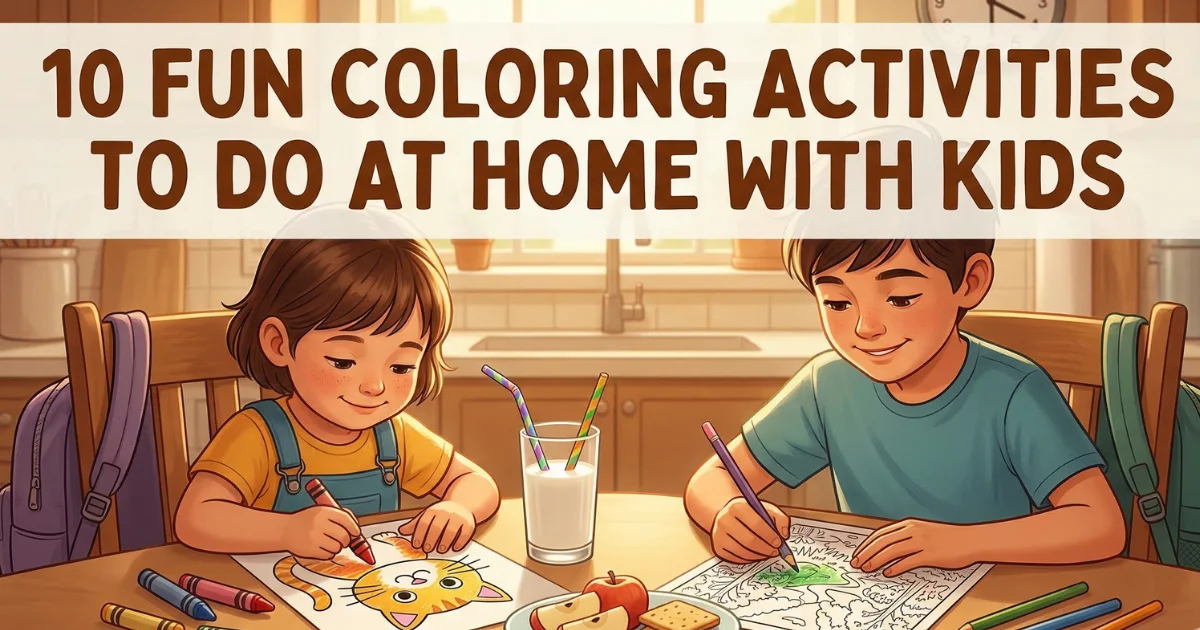
What it is: Set up the coloring station at the kitchen table alongside the after school snack. Children color while they eat — or alternate between coloring and snacking. Keep coloring supplies on one side of the placemat and the snack on the other.
Why it works: Combining two after school rituals — snack and decompression — into one streamlined activity saves time and creates a wonderfully cozy transition moment. Children who are too hungry to settle for coloring immediately will happily color between bites of apple slices or crackers.
Practical tip: Use crayons rather than markers for this activity to avoid ink accidents near food. Keep a small damp cloth nearby for sticky fingers before touching the coloring page.
Activity 5 — Themed Weekly Coloring
What it is: Choose a different coloring theme for each day of the school week. Monday is animal day. Tuesday is nature day. Wednesday is character day. Thursday is educational day — letters, numbers, or maps. Friday is free choice day where your child picks any page they want.
Why it works: The predictable weekly structure gives children something to anticipate each day — Thursday they know it is educational coloring, Friday they know they get to choose. This anticipation builds excitement and makes the routine feel special rather than repetitive.
After school bonus: Connect the weekly theme to what children are learning at school. If they are studying ocean animals at school make Tuesday ocean animal coloring day. This reinforces classroom learning in a relaxed home environment.
Activity 6 — Coloring Gift Making
What it is: Choose a coloring page that could become a gift for someone — a flower page for Grandma, a birthday cake page for a friend’s upcoming birthday, a heart page for a parent. Color it carefully and thoughtfully with the recipient in mind. Fold it into a card and write a message inside.
Why it works: Coloring with a specific recipient in mind transforms the activity from self expression into an act of generosity. Children who color for someone else often show more care and concentration than when coloring for themselves. The finished card becomes a genuinely meaningful handmade gift that costs nothing.
After school bonus: This activity naturally leads to conversations about the people your child cares about — grandparents, friends, teachers. It is a wonderful way to strengthen children’s awareness of their relationships and the people who matter in their lives.
Activity 7 — Nature Coloring and Observation
What it is: Before coloring take a short 10 minute walk around the garden, the backyard, or the street. Ask your child to find one natural thing they find interesting — a leaf, a flower, a bird, an insect. Return home and find a coloring page that matches what they observed. Color it while talking about what they saw.
Why it works: Connecting the coloring page to a real observation made minutes earlier creates an unusually deep learning experience. The walk itself provides the physical movement children often need after a day sitting at school. The coloring consolidates the outdoor observation and extends the nature connection.
After school bonus: The walk serves double duty — it provides fresh air and physical movement which helps discharge school day tension, and it sets up a focused and meaningful coloring activity to follow.
Activity 8 — Collaborative Family Coloring Page
What it is: Print one large coloring page and divide it into sections — one section per family member. Each person colors their own section using their own color choices and style. When complete the page is assembled and displayed as a family artwork.
Why it works: Collaborative coloring builds a sense of family connection and shared creative identity. Children love seeing how their section fits into the bigger picture alongside their parents’ and siblings’ sections. The finished piece becomes a meaningful family artifact worth keeping.
After school bonus: This activity works particularly well on Fridays as a weekly family ritual that marks the end of the school week and the beginning of the weekend. It gives everyone — parents included — a few minutes of calm creative connection before the weekend begins.
Activity 9 — Coloring with Music
What it is: Create a simple coloring playlist of your child’s favorite songs. Put the playlist on and color for the length of the playlist — typically 20 to 30 minutes. Encourage your child to let the music influence their color choices — fast happy songs might inspire bright bold colors, slow gentle songs might inspire soft pastels.
Why it works: Music enhances the emotional and sensory richness of coloring. The combination of music and coloring activates more areas of the brain simultaneously and often produces a deeper state of focus and calm than either activity alone. Many children who struggle to settle for silent coloring will sustain the activity happily with music playing.
After school bonus: Let your child choose the playlist. Musical autonomy is empowering for children who have spent a day following other people’s rules. When they choose the music they feel ownership over the entire coloring session.
Activity 10 — Coloring and Conversation Cards
What it is: Print a coloring page and a set of simple conversation prompt cards — small cards with questions written on them such as — what was the best part of your day, what made you laugh today, what is one thing you learned today, what are you looking forward to tomorrow. Place the cards face down beside the coloring page. Every few minutes your child draws a card and answers the question while continuing to color.
Why it works: The conversation card technique is a breakthrough solution for parents who want to connect with their children after school but find that direct questions feel like an interrogation. When children are occupied with coloring and the questions come from cards rather than directly from a parent the conversation flows more naturally and openly.
After school bonus: This is hands down the most effective after school debrief technique on this list. The coloring keeps children’s hands and part of their mind occupied which paradoxically makes them more open and communicative about their day. Many parents report learning more about their child’s school day through this technique than through any direct conversation.
Tips for Making After School Coloring Activities Work
Have everything ready before they arrive: Set up the coloring station before your child gets home. The transition from school to home is smoother when children walk in to find a welcoming activity already set up and waiting for them.
Offer a choice: Give your child a choice between two activities rather than presenting one. Would you like to do Story Coloring or Coloring with Music today? Choice builds buy-in and prevents resistance.
Keep sessions to 20 minutes: After school children have limited reserves of sustained attention. A focused 20 minute coloring activity is more valuable than a 45 minute session that ends in frustration. End while they are still engaged.
Avoid screens for at least 30 minutes after coloring: The calm state achieved through coloring is valuable and worth protecting. Moving directly from coloring to screens undoes much of the decompression benefit. Try to keep screens off for at least 30 minutes after the coloring activity ends.
Free Coloring Pages for All 10 Activities
Find all the coloring pages you need for these activities completely free on Daily Coloring Pages:
- 🎨 Animal Coloring Pages for Kids
- 🎨 25 Free Coloring Pages About Friendship for Kids
- 🎨 25 Free Coloring Pages About Kindness and Positive Affirmations
- 🎨 Alphabet Coloring Pages A to Z
Frequently Asked Questions
What age are these activities suitable for? All 10 activities are designed to work for children aged 4 to 12. Younger children aged 4 to 6 will need more parental involvement and simpler coloring pages. Older children aged 7 to 12 can engage more independently and with more complex pages.
How do I get my child interested in coloring if they have never done it regularly? Start with Activity 3 — the Coloring Race — as it has a playful competitive element that appeals to children who find regular coloring too passive. Or start with Activity 9 — Coloring with Music — which adds sensory richness that many children find immediately appealing.
Can I do these activities with multiple children at different ages? Absolutely. All 10 activities work beautifully with mixed age groups. Give each child a coloring page appropriate for their age and level. The activities themselves work the same regardless of age — it is the complexity of the coloring page that you adjust per child.
What if my child prefers screens after school? This is very common and completely normal. Do not try to replace screens with coloring through restriction or argument. Instead position coloring as something exciting that happens first — before screens. Screens after coloring rather than instead of coloring reduces resistance dramatically.
After school does not have to be chaos. It can be colorful. 🖍️
— Lina, Daily Coloring Pages