How to Create a Fun Coloring Routine for kids (Easy Tips for Parents)
Table of Contents
How to Create a Fun Coloring Routine for kids (Easy Tips for Parents)
In a world full of screens, notifications, and constant stimulation, one of the greatest gifts you can give your child is a simple, calm, creative routine. A daily coloring routine costs almost nothing, requires no special skills, and delivers benefits that last a lifetime — better focus, stronger fine motor skills, emotional regulation, and a love of creativity that grows with your child.
The good news is that building a coloring routine does not need to be complicated. You do not need a dedicated art room, expensive supplies, or a perfectly planned curriculum. You just need a few printed pages, something to color with, and a little consistency.
This guide shows you exactly how to create a coloring routine that your toddler or young child will genuinely look forward to every day.
Why a Coloring Routine Works Better Than Occasional Coloring
There is a big difference between coloring occasionally and coloring routinely. Occasional coloring is enjoyable but its benefits are limited. A consistent routine multiplies those benefits dramatically.
Predictability builds security: Young children thrive on predictability. When coloring happens at the same time each day — after breakfast, after school, before bed — children begin to anticipate it and settle into it more quickly and deeply. The routine itself becomes calming before the coloring even begins.
Skills develop with repetition: Fine motor skills, color recognition, pencil grip, and sustained attention all improve with regular practice. A child who colors for 15 minutes every day will develop these skills dramatically faster than a child who colors for an hour once a week.
It becomes a cherished ritual: Children who have a daily coloring routine often develop a deep personal relationship with coloring that stays with them into adulthood. Many adult colorists trace their love of the activity back to a simple childhood routine established by a parent or teacher.
It creates screen-free time: A coloring routine naturally displaces screen time without conflict. When coloring is simply what we do at this time of day children accept it easily. Fighting screens is hard. Replacing screens with an appealing ritual is much easier.
Step 1 — Choose the Right Time of Day
The single most important decision in building a coloring routine is when it happens. The right time varies by child and family but here are the moments that work best for most toddlers and young children:
After breakfast — Morning warm-up: Morning coloring is calm and focused. Children are rested and their attention is fresh. A 15 minute coloring session after breakfast sets a peaceful creative tone for the whole day and is particularly effective for children who attend preschool or kindergarten in the afternoon.
After school — Transition and decompression: For children aged 5 and up the period immediately after school is often emotionally and physically exhausting. A quiet coloring session provides a perfect transition between the busy social environment of school and the relaxed environment of home. It gives children time to decompress without screens.
Before bed — Wind-down routine: Coloring before bed is one of the most effective wind-down activities for young children. The calm focused nature of coloring gently signals to the nervous system that it is time to slow down. It works particularly well as part of a broader bedtime routine — bath, coloring, story, sleep.
Rainy day activity: For families who prefer a more flexible approach rather than a fixed daily time designate coloring as the go-to rainy day or quiet time activity. When the weather keeps children inside coloring automatically becomes the activity.
Step 2 — Set Up a Simple Coloring Station
A dedicated coloring station — even a very simple one — makes a huge difference to how consistently the routine happens. When everything is ready and accessible children can start immediately without waiting for supplies to be found and organized.
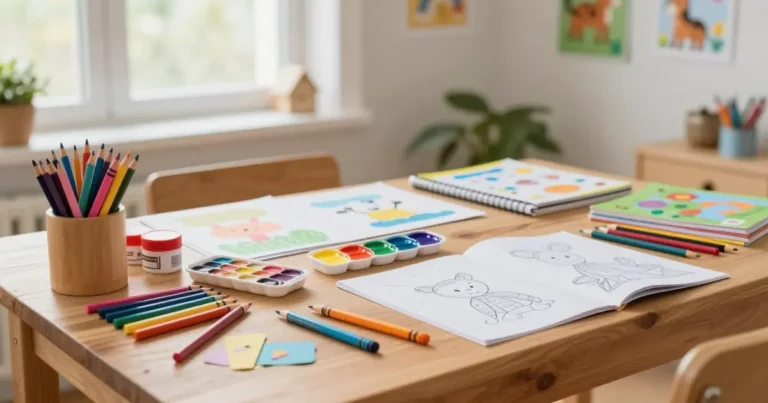
What you need: A low table or tray that is the right height for your child, a small container or cup holding crayons or colored pencils, a stack of pre-printed coloring pages, and good lighting. That is genuinely all you need.
Keep it simple and accessible: Everything should be at child height and within easy reach. The goal is that your child can sit down and start coloring independently without needing your help to set up. This independence builds confidence and makes the routine sustainable.
Rotate the coloring pages: Keep a small selection of 5 to 10 coloring pages available at the station and rotate them regularly. Variety keeps the routine fresh and gives children the pleasure of choosing what to color each day.
Add a personal touch: Let your child decorate their coloring station — a favorite toy displayed nearby, a small plant, a colorful placemat. When children feel ownership over their space they are more motivated to use it.
Step 3 — Choose the Right Coloring Pages for Each Age
The right coloring page makes all the difference between a child who engages happily and one who feels frustrated and gives up.
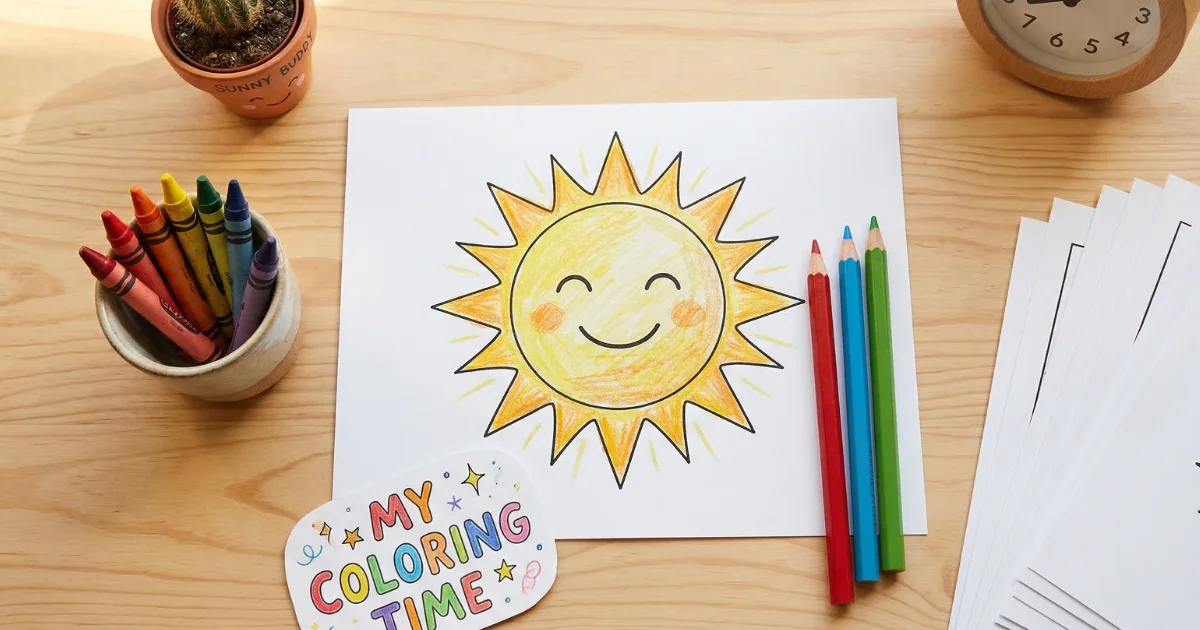
For toddlers aged 2 to 4: Choose pages with very large bold simple outlines and minimal detail. Single objects taking up most of the page — a big sun, a simple flower, a large animal face. Toddlers cannot color within small detailed lines and should not be expected to. Large open areas let them experience the joy of coloring without frustration.
For young children aged 5 to 8: Children in this age group can handle more detail and enjoy more complex scenes. Animal pages, character pages, simple nature scenes, and themed pages connected to their current interests — dinosaurs, fairies, vehicles, sports — all work beautifully. The key is matching the complexity to your child’s current skill level and adjusting upward as they develop.
Follow your child’s interests: The single most powerful factor in maintaining a coloring routine is choosing pages that genuinely excite your child. A child who loves dogs will color a dog page with far more enthusiasm and focus than a page of an animal they find less interesting. Keep a variety of themes available and let your child choose.
Print in advance: Do not wait until your child asks to color to print the pages. Keep a stack of 10 to 15 pages ready at all times. Running out of pages and having to print while a child waits disrupts the routine and the mood.
Step 4 — Color Together Sometimes
One of the most powerful things a parent can do to strengthen a child’s coloring routine is to sit down and color alongside them occasionally — not every day but regularly enough that your child experiences coloring as a shared family activity.
Why this matters: Children model the behavior of the adults around them. When a parent sits down and genuinely enjoys coloring it sends a powerful message — this is something worthwhile. This is something adults do too. This is something our family values.
You do not need to be artistic: You do not need to color beautifully. You just need to color genuinely. Pick up a page, choose your colors, and color with real engagement. Your child will notice and mirror your enthusiasm.
Talk while you color: Some of the best conversations happen during shared coloring sessions. The side by side nature of the activity — both looking at your own pages rather than at each other — creates a relaxed atmosphere where children open up naturally. Ask open questions — what is your favorite color today? What shall we name this animal? If this butterfly could fly anywhere where would it go?
Step 5 — Celebrate and Display Finished Pages
Nothing motivates a child to continue a routine more powerfully than seeing their finished work celebrated and displayed.
Create a coloring gallery: Dedicate a wall, a section of the refrigerator, or a simple string with clothespins as a coloring gallery. Every finished page goes on display. As the gallery grows children develop pride in their growing collection and are motivated to add to it.
Keep a coloring portfolio: Keep a simple folder or binder as a coloring portfolio. When the gallery display is full move pages into the portfolio. At the end of each year the portfolio is a beautiful record of your child’s creative growth — you can literally see the improvement in fine motor skills and color choices from the first page to the last.
Acknowledge effort not outcome: When commenting on your child’s coloring focus on the effort and the process rather than the result. Not — that is so beautiful — but — I love how carefully you colored the wings. I can see you worked really hard on the details. This builds intrinsic motivation and a growth mindset that extends far beyond coloring.
Sample Weekly Coloring Routine
Here is a simple example routine that works well for most families with toddlers and young children:
| Day | Time | Theme |
|---|---|---|
| Monday | After breakfast — 15 min | Animals |
| Tuesday | After school — 20 min | Free choice |
| Wednesday | After breakfast — 15 min | Educational — letters or numbers |
| Thursday | After school — 20 min | Seasonal or holiday theme |
| Friday | Before bed — 15 min | Calm patterns or nature scenes |
| Weekend | Flexible — whenever | Special long coloring session with parent |
Quick Tips for Keeping the Routine Going
Start small: Begin with just 10 to 15 minutes per session. It is much easier to extend a routine that is working than to rescue one that has become a battle.
Be consistent but flexible: Aim for the same time each day but do not stress if a day is missed. One missed day does not break a routine. A week of inconsistency might — so return to the routine as quickly as possible after any disruption.
Refresh the supply regularly: Download and print new coloring pages every week or two. New pages create excitement and keep the routine feeling fresh rather than repetitive.
Let your child lead: Some days your child will color for 30 focused minutes. Other days they will do 5 minutes and want to stop. Follow their lead. A routine that respects a child’s natural rhythm is a routine that lasts.
Connect coloring to seasons and events: Print Halloween pages in October, Christmas pages in December, Valentine pages in February. Connecting the coloring pages to what is happening in the real world keeps the routine feeling relevant and exciting throughout the year.
Free Coloring Pages to Start Your Routine Today
Everything you need to start your child’s coloring routine is right here on Daily Coloring Pages — completely free. Browse our collections to find the perfect pages for your child’s age and interests:
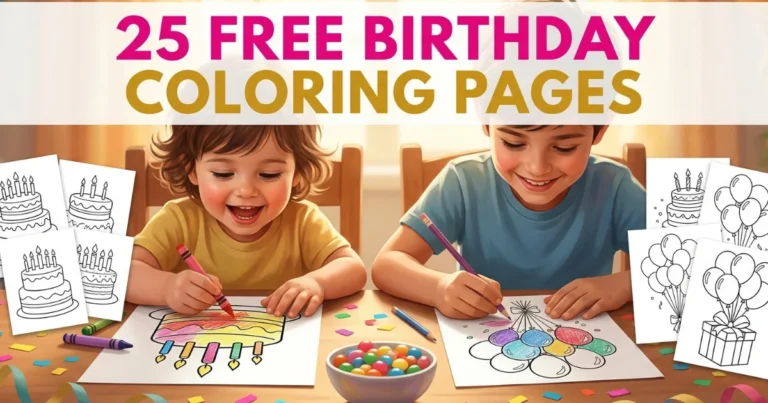
- 🎨 25 Free Birthday Coloring Pages
- 🎨 Alphabet Coloring Pages A to Z
Frequently Asked Questions
How long should a coloring session be for toddlers? For toddlers aged 2 to 3 aim for 10 to 15 minutes per session. Toddlers have short attention spans and it is better to end the session while they are still engaged than to push past their natural limit. For children aged 4 to 5 sessions of 15 to 20 minutes work well.
My child loses interest quickly — what should I do? Start with coloring pages that feature your child’s absolute favorite thing — their favorite animal, favorite color, or favorite character. Short sessions with high interest pages build the habit. Gradually introduce more variety once the routine is established.
Should I correct my child’s coloring? Never. There is no wrong way to color. A sky can be green. A dog can be purple. Correcting a child’s color choices undermines their confidence and kills their enthusiasm. Your only job is to provide the materials and the time — what they do with them is entirely their own creative expression.
What if my child wants to color outside the lines? This is completely normal and developmentally appropriate especially for toddlers. Coloring within lines is a fine motor skill that develops gradually. Celebrate their coloring regardless of whether it stays within the lines. The lines will come with time and practice.
Can coloring replace screen time? For many families a coloring routine successfully reduces screen time naturally and without conflict. When coloring is simply what we do at this time children accept it far more easily than being told screens are off. It works best when introduced positively as something exciting rather than as a replacement for something taken away.
A few minutes of coloring every day — a lifetime of creativity. 🖍️
— Lina, Daily Coloring Pages