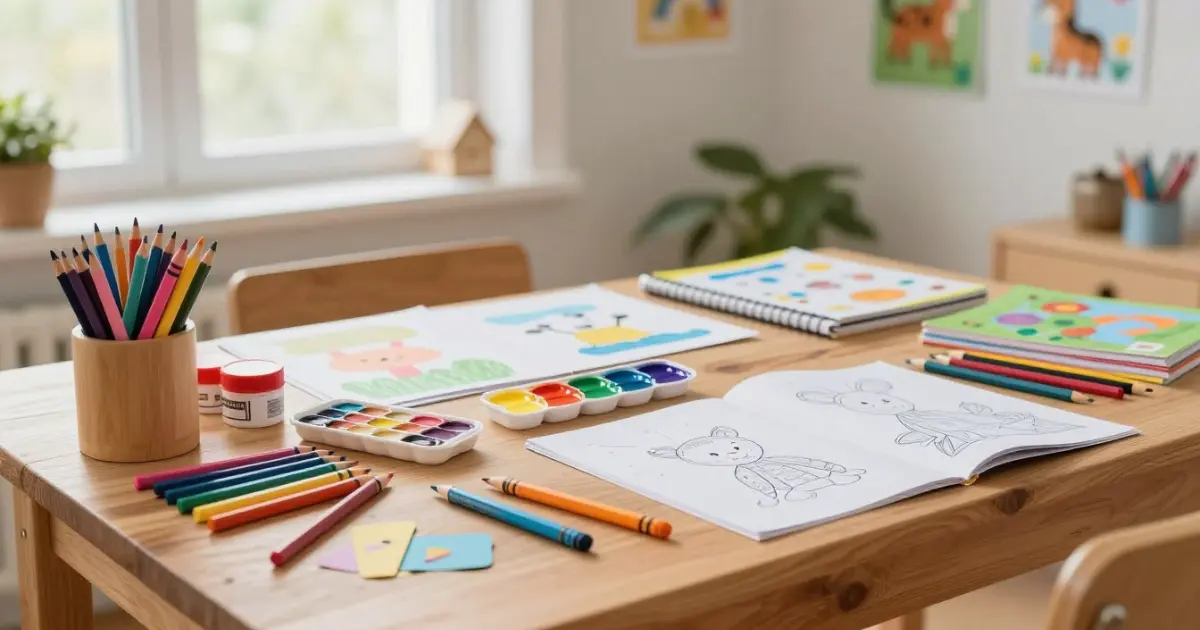
How to Choose the Best Coloring Tools for kids Your Child’s Age
Table of Contents
How to Choose the Best Coloring Tools for Your Child’s Age
Watching your child create their first masterpiece is a joyful milestone to a parent. You might wonder which supplies are safe and helpful during these early stages. Selecting the right children’s art materials ensures your little one stays engaged without getting frustrated.
Every stage of development requires a unique approach to creativity. For toddlers, chunky crayons work best, while older students need precision pencils. Providing age-appropriate art supplies fosters confidence and helps refine essential fine motor skills.
Finding the best coloring tools for kids by age doesn’t have to be a guessing game. You simply need to match product features to physical abilities and interests. Let’s explore how to find the perfect match during each developmental phase.
Key Takeaways
- Match artistic items to your child’s specific developmental milestones.
- Prioritize non-toxic and washable options for younger users.
- Look for ergonomic designs that support developing grip strength.
- Introduce more complex mediums as coordination and focus improve.
- Encourage creative confidence by providing the right level of challenge.
- Ensure all supplies meet current safety standards for your region.
Best Coloring Tools for Kids by Age
As your child grows, their artistic abilities and preferences evolve, making it essential to choose coloring tools that match their developmental stage. The right coloring tools can enhance their creativity, fine motor skills, and self-expression. Here’s a breakdown of the best coloring tools for kids by age.
Toddlers (Ages 1-3)
At this age, children are beginning to explore their creativity and develop their fine motor skills. The right coloring tools can make a significant difference in their artistic journey.
Jumbo Crayons for Grip Development
Jumbo crayons are perfect for toddlers as they are easy to grip and maneuver, helping to develop their hand muscles. Key benefits include:
- Easy to grasp and hold
- Promotes grip development
- Vibrant colors to stimulate creativity
Washable Thick Markers
Washable thick markers are another excellent option for toddlers. They are easy to clean, and their thick tips make them ideal for little hands.
Some popular brands include: Crayola, Washable Markers by Faber-Castell
Preschoolers (Ages 3-5)
Preschoolers are more confident in their coloring abilities and are ready to explore a variety of tools.
Triangular Crayons and Standard Crayons
Triangular crayons are great for this age group as they are easy to hold and provide a comfortable grip. Standard crayons are also suitable, offering a range of colors and creative possibilities.
Washable Watercolor Paints and Thick Colored Pencils
Washable watercolor paints introduce children to a new medium, encouraging experimentation and creativity. Thick colored pencils are also ideal, providing a more precise coloring experience.

Early Elementary (Ages 5-8)
Children in this age group are refining their coloring skills and are ready for more advanced tools.
Colored Pencils and Regular Crayons
Colored pencils offer a more precise coloring experience, while regular crayons continue to be a favorite among children.
Broadline Washable Markers
Broadline washable markers are perfect for creating bold, vibrant artwork. They are easy to clean and come in a range of colors.
Older Children (Ages 8+)
Older children are more skilled and confident in their artistic abilities, requiring more advanced coloring tools.
Artist-Grade Colored Pencils
Artist-grade colored pencils provide high-quality, light-fast colors, ideal for detailed and intricate artwork.
Fine-Tip Markers and Advanced Watercolor Sets
Fine-tip markers are perfect for detailed work, while advanced watercolor sets offer a range of creative possibilities.
Key Factors Beyond Age When Choosing Art Supplies
Beyond age, several key factors can guide your selection of art supplies for your child. While age provides a general guideline, considering these additional factors can help you make a more informed decision that supports your child’s creative development.
Skill Level and Individual Interests
Understanding your child’s skill level and individual interests is crucial when selecting art supplies. For instance, a child with fine motor skill challenges may benefit more from larger, easier-to-grasp crayons or markers, while a child with advanced skills might enjoy more complex tools like sketchbooks or varied tip markers.
Markers and crayons are staples in many children’s art supplies. For younger children, washable markers and crayons are a must, while older children might enjoy a wider range of colors and tip sizes.

Washability and Mess Management
Washability is a significant factor when choosing art supplies, especially for younger children. Washable markers and crayons can save you and your child a lot of stress by making clean-up easier.
Here is a comparison of different art supply materials in terms of washability:
| Material | Washability | Recommended Age |
|---|---|---|
| Washable Markers | High | 3-6 years |
| Crayons | Medium | 2-8 years |
| Paints | Low-Medium | 4-10 years |
Quality Versus Budget Considerations
When it comes to art supplies, there’s often a trade-off between quality and budget. While high-quality art supplies can be more durable and offer better performance, they can also be more expensive.
Here are some tips for balancing quality and budget:
- Start with the basics: Invest in a few high-quality, versatile supplies that can be used in various projects.
- Consider buying in bulk: Purchasing supplies like crayons or markers in larger quantities can often be more cost-effective.
- Look for sales and discounts: Keep an eye out for sales or discounts on art supplies, especially during holiday seasons or back-to-school periods.
Conclusion
Selecting the best coloring tools for kids by age is crucial for fostering their creative development. As discussed, different age groups require age-appropriate art supplies that cater to their unique needs and skills.
By considering factors such as skill level, individual interests, washability, and quality versus budget, you can make informed decisions to support your child’s artistic growth. Toddlers, preschoolers, early elementary, and older children each have distinct requirements that can be met with the right art supplies.
Exploring the various options available and understanding what works best for your child will help you provide them with the tools they need to thrive creatively. With the right best coloring tools for kids by age, you can encourage their imagination and help them develop essential skills through art.
FAQ
What are the best coloring tools for kids by age to support their development?
Choosing the right tools depends on your child’s motor skill milestones. For toddlers aged 1-3, you should look for jumbo crayons like Crayola My First which are easy for small hands to palm. As they reach preschool age (3-5), transition to triangular crayons and washable watercolor paints to encourage a tripod grip. For early elementary students (ages 5-8), colored pencils and broadline markers are ideal, while older children (8+) can handle the precision of artist-grade colored pencils and fine-tip markers.
Why are triangular crayons considered the best art supplies for preschoolers?
Triangular crayons, such as those made by Melissa & Doug or Faber-Castell, are excellent age-appropriate art supplies because their shape prevents them from rolling off tables and naturally guides your child’s fingers into the correct writing position. This helps your preschooler develop the muscle memory needed for handwriting later on while they enjoy their drawing tools for kids.
When should I introduce colored pencils to my child’s art kit?
You can introduce colored pencils around age 5. At this stage, your child usually has the dexterity to control the thinner barrels and apply different levels of pressure for shading. For beginners, thick colored pencils like the Lyra Ferby series are easier to grip, while older, more experienced children will appreciate the smooth pigment of Prismacolor Premier pencils.
How can I manage the mess when using markers and watercolor paints with younger children?
To keep your home clean, you should always opt for washable markers and watercolor paints. Brands like Crayola offer “Ultra-Clean” versions that wash off skin, clothing, and even painted walls. For watercolor paints, pan sets are generally much less messy than tubes for younger children, as they require less water and are easier to contain within the tray.
Are artist-grade children’s art materials worth the extra cost for older kids?
Yes, if your child has a sustained interest in art, upgrading their children’s art materials can boost their confidence. Higher-quality tools, such as Winsor & Newton watercolors or Derwent pencils, contain more pigment and less filler. This allows your child to achieve more vibrant results and practice advanced techniques like blending and layering that aren’t possible with basic school-grade supplies.
What are the most durable drawing tools for kids who are just starting to scribble?
For the youngest artists, durability is key. Jumbo crayons are less likely to snap under the heavy pressure toddlers often apply. You might also consider “egg-shaped” crayons from Crayola or solid tempera paint sticks like Kwik Stix, which provide bold color without the breakage associated with thinner, more fragile crayons.