How to Teach Reading to Your Child at Home — Step by Step Guide for Parents
Table of Contents
How to Teach Reading to Your Child at Home — Step by Step Guide for Parents
Teaching your child to read is one of the most profound gifts a parent can give. A child who reads well has access to every subject, every story, every idea, and every opportunity that the written world contains. And the foundation of that lifelong gift is built in the earliest years — long before formal schooling begins.
The encouraging news for parents is this — you do not need to be a teacher, you do not need expensive programs, and you do not need to follow a rigid curriculum to teach your child to read at home. What you need is consistency, patience, the right approach, and the understanding that reading development is a gradual process that unfolds differently for every child.
This step by step guide covers everything you need to know to support your toddler or preschooler on their reading journey — from the very first pre-reading foundations through to the exciting moment they begin reading simple words independently.
Understanding How Children Learn to Read
Before diving into the steps it helps to understand the reading development process — because reading is not one skill. It is a collection of interconnected skills that develop in a roughly sequential order.
Pre-reading skills — ages 0 to 3: Before children can read they must develop a set of foundational pre-reading skills — print awareness, phonological awareness, vocabulary, and a love of books and stories. These skills develop through being read to, through conversation, through songs and rhymes, and through exposure to print in the environment.
Emergent reading — ages 3 to 5: Children begin to understand that print carries meaning, learn to recognize some letters, develop phonemic awareness — the ability to hear and manipulate individual sounds in words — and begin connecting letters to sounds.
Early reading — ages 5 to 7: Children begin decoding — using letter-sound knowledge to sound out simple words. They develop sight word recognition — instant recognition of common words — and begin reading simple texts with increasing fluency.
Understanding this progression helps parents calibrate their expectations and choose the right activities for their child’s current developmental stage.
Step 1 — Build a Love of Books Before Anything Else
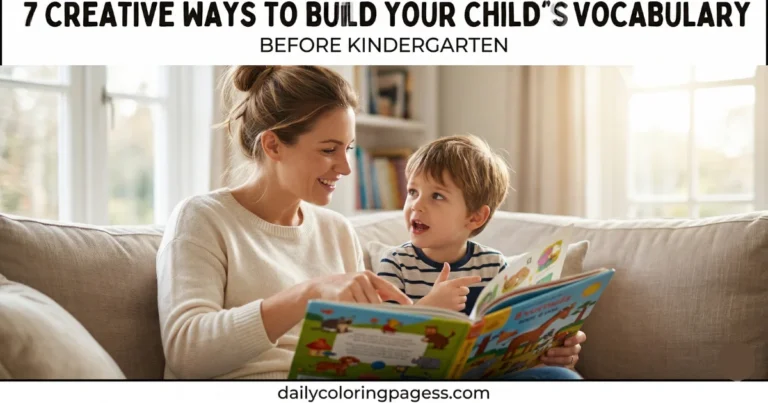
The single most important thing you can do to support your child’s reading development — especially with toddlers — is to make books and stories a central, joyful part of daily life.
Children who love books are infinitely more motivated to learn to read than children who see books as work. And love of books is built through shared reading experiences — through the warmth and closeness of sitting together with a story, through the excitement of a plot unfolding, through the magic of a world opening up through words.
How to build this habit: Read together every single day — even for just 10 to 15 minutes. Make it a ritual — same time, same cozy spot, same warm anticipation. Let your child choose books from a curated selection. Use different voices for different characters. Stop and look at the illustrations together. Ask questions about the story.
For toddlers: Board books with simple bright illustrations and minimal text are perfect. Books with repetition — where the same phrase appears on every page — are particularly loved by toddlers and build early text familiarity.
For preschoolers: Picture books with richer stories, more complex vocabulary, and beautiful illustrations expand vocabulary and comprehension. Introduce simple non-fiction books about topics your child is passionate about — dinosaurs, animals, vehicles, space.
Step 2 — Develop Phonological Awareness Through Play
Phonological awareness is the ability to hear and manipulate the sounds in spoken language — and it is one of the strongest predictors of reading success. The good news is that phonological awareness develops through play, songs, and everyday conversation — not through worksheets or formal instruction.
Rhyming: Nursery rhymes, rhyming picture books, and simple rhyming games build phonological awareness powerfully. Cat and hat. Dog and log. Sun and fun. When children can hear rhymes they are developing the auditory sensitivity to language that reading requires.
Syllable clapping: Clap out the syllables in words together — el-e-phant is three claps, cat is one clap, but-ter-fly is three claps. This simple game builds awareness of the sound structure of words.
Alliteration: Play with words that start with the same sound — silly snakes, bouncy balls, magical monkeys. Alliteration games develop sensitivity to initial consonant sounds which is directly relevant to phonics learning.
Oral blending and segmenting: Play simple sound games — I am going to say some sounds, can you put them together to make a word? C-A-T. What word is that? This oral blending skill directly prepares children for the decoding process of reading.
Step 3 — Introduce Letter Knowledge
Once your child has a solid foundation of phonological awareness and a love of books it is time to introduce letter knowledge — the names and sounds of the letters of the alphabet.
Start with the letters in your child’s name: Children are naturally motivated to learn the letters in their own name. Write their name clearly, point out the letters, name them, trace them with a finger. Their name is the perfect first word to read and write.
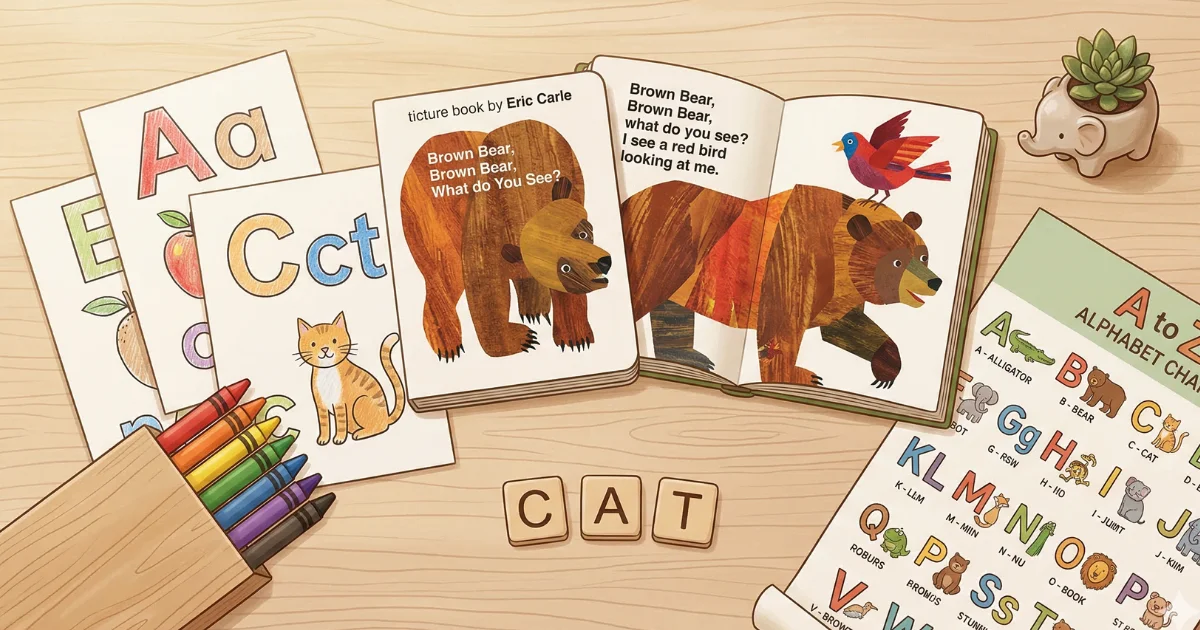
Use alphabet books and coloring pages: Alphabet coloring pages are one of the most effective tools for building letter knowledge because they combine visual recognition of the letter shape with a memorable image that starts with that letter sound. A is for Alligator, B is for Butterfly — the image anchors the letter-sound connection in memory.
Sing the alphabet song: The alphabet song builds letter name knowledge in a memorable, enjoyable way. Sing it regularly and point to the letters on an alphabet chart as you sing.
Focus on letter sounds not just names: While letter names are useful what children really need for reading is letter sounds. A says ah. B says buh. C says cuh. Practice the sounds of letters alongside their names.
Use multisensory approaches: Trace letters in sand, form them with playdough, write them in the air, draw them with fingers on each other’s backs. Multisensory letter practice creates stronger and more lasting neural connections than visual recognition alone.
Step 4 — Begin Blending Sounds into Words
Once your child knows the sounds of several letters you can begin the exciting step of blending those sounds together into simple words. This is the foundation of decoding — the core skill of reading.
Start with simple CVC words: CVC stands for consonant-vowel-consonant — simple three letter words like cat, dog, sun, hat, pig, cup. These are the simplest words to decode because they have one sound per letter and follow predictable patterns.
Sound it out together: Point to each letter, say its sound, then blend the sounds together. C-A-T. Cuh-ah-tuh. Cat. Do this slowly and patiently. Some children grasp blending quickly. Others need weeks of practice before it clicks. Both are completely normal.
Use simple decodable readers: Decodable readers are simple books where every word follows the phonics patterns the child has already learned. They look very simple to adults but they are powerful learning tools because children can decode every word successfully — building both skill and confidence simultaneously.
Play simple word building games: Use letter tiles or letter cards to build simple words together. Change one letter to make a new word — cat becomes hat, hat becomes hit, hit becomes sit. This word family approach builds decoding skill rapidly and children find it genuinely fun.
Step 5 — Build Sight Word Recognition
While phonics teaches children to decode words by sounding them out many of the most common words in English do not follow regular phonics patterns — words like the, said, was, have, they, and are. These are called sight words and they need to be memorized as whole words rather than decoded.
Start with the most common sight words: The Dolch sight word list organizes common sight words by frequency. Start with the most frequent — the, a, I, is, it, in, at, on — and add more gradually as each set becomes automatic.
Make sight word practice fun: Sight word games are far more effective than flashcard drilling. Write sight words on stepping stones and jump to each one as you say it. Play sight word snap with word cards. Go on a sight word hunt — find the word the in a book as many times as possible.
Use sight words in context: Always practice sight words in the context of real reading — not just in isolation. Point out sight words as you read together. Highlight them with a finger. The combination of isolated practice and contextual reading builds the fastest automaticity.
Step 6 — Read Together at Every Stage
Reading together does not stop when children begin to read independently — it deepens and evolves. Shared reading at every stage of the reading journey provides models of fluent reading, expands vocabulary beyond what children can read independently, and maintains the emotional connection to books that motivates continued reading development.
Take turns reading: Once your child begins reading simple texts take turns — your child reads one page, you read the next. This reduces the effort required while maintaining engagement with the story.
Read above their independent level: Continue reading books aloud to your child that are significantly above their current independent reading level. A child who reads simple sentences independently can listen to and comprehend much more complex stories — and those stories are expanding their vocabulary and comprehension simultaneously.
Never make reading feel like work: The moment reading becomes a source of anxiety or pressure it loses its power as a motivator. Keep the reading journey joyful, low pressure, and driven by your child’s own growing enthusiasm. Celebrate every milestone — the first word read independently, the first sentence, the first page, the first book.
Common Mistakes to Avoid
Pushing too early: Some children are ready to begin formal reading instruction at age 4. Others are not ready until age 6 or 7. Pushing reading before a child is developmentally ready creates anxiety and negative associations with books. Follow your child’s lead and trust the process.
Drilling and testing: Frequent testing and drilling turns reading into a stressful performance rather than an enjoyable skill. Keep practice playful, brief, and pressure-free.
Comparing to other children: Reading development varies enormously between children of the same age. A child who reads at 4 and a child who reads at 7 will typically have equivalent reading skills by age 9 or 10. Comparison creates anxiety without adding value.
Skipping the foundation: Parents who are eager to teach letter sounds and decoding sometimes skip the phonological awareness and love of books foundation. This is a mistake. Strong phonological awareness and genuine book enthusiasm make everything else dramatically easier.
Frequently Asked Questions
What age should I start teaching my child to read? Pre-reading foundations — being read to, hearing rhymes and songs, developing oral language — should begin from birth. Formal letter and phonics instruction is typically most effective from around age 4 to 5 for most children. However following your individual child’s readiness is more important than following any specific age guideline.
My child is 5 and shows no interest in letters — should I be worried? Not necessarily. Children develop at different rates and interest in letters varies widely. Continue reading together daily, playing with rhymes and sounds, and providing alphabet materials in a low pressure way. If you have significant concerns about your child’s language and literacy development speak with your pediatrician or a speech language pathologist.
How long should reading practice sessions be? For toddlers 5 to 10 minutes of shared reading is ideal. For preschoolers 15 to 20 minutes works well. Keep formal letter and phonics practice to 5 to 10 minutes maximum — short focused sessions are more effective than long ones for young children.
Do reading apps and programs work? Some reading apps and programs are well designed and can be useful supplements to the core practices in this guide. However no app or program replaces daily shared reading with a loving adult — the emotional connection and responsive interaction of shared reading provides benefits that no technology can replicate.
My child loves being read to but refuses to try reading themselves — what should I do? This is very common and completely normal. Continue reading together without pressure. Play phonological awareness games verbally. Provide alphabet coloring pages and letter activities in a casual playful way. The transition from loving being read to wanting to read independently happens naturally when children feel confident and ready — it cannot be forced and does not need to be.
— Lina, Daily Coloring Pages