Simple Habits That Make kids Smarter Every Day (Science Backed Tips)
Table of Contents
Simple Habits That Make kids Smarter Every Day (Science Backed Tips)
Every parent wants to give their child the best possible start in life. And while intelligence is partly genetic the science is clear — the daily habits and environment you create for your child have an enormous impact on how their brain develops, how they learn, and how smart they become.
The good news is that the most effective brain-building habits are not expensive, complicated, or time-consuming. They are simple, daily, and completely within reach of every parent regardless of income, education, or circumstance.
Here are the habits that research consistently shows make the biggest difference to children’s cognitive development — organized by category so you can start implementing them today.
Why Daily Habits Matter More Than Genetics
Before we dive into the habits it is worth understanding why daily routines have such a powerful impact on children’s intelligence.
The human brain is not fixed at birth. It is extraordinarily plastic — meaning it physically changes and grows in response to experience. Every time a child learns something new, solves a problem, hears a story, or engages in a creative activity new neural connections form in the brain. The more frequently these connections are activated the stronger they become.
This is why daily habits matter so much more than occasional enrichment experiences. A child who reads for 15 minutes every single day builds significantly more neural connections related to language and comprehension than a child who visits a museum once a month. Consistency of experience is what shapes the developing brain.
The habits in this guide are effective precisely because they are daily — small consistent actions that compound over time into significant cognitive advantage.
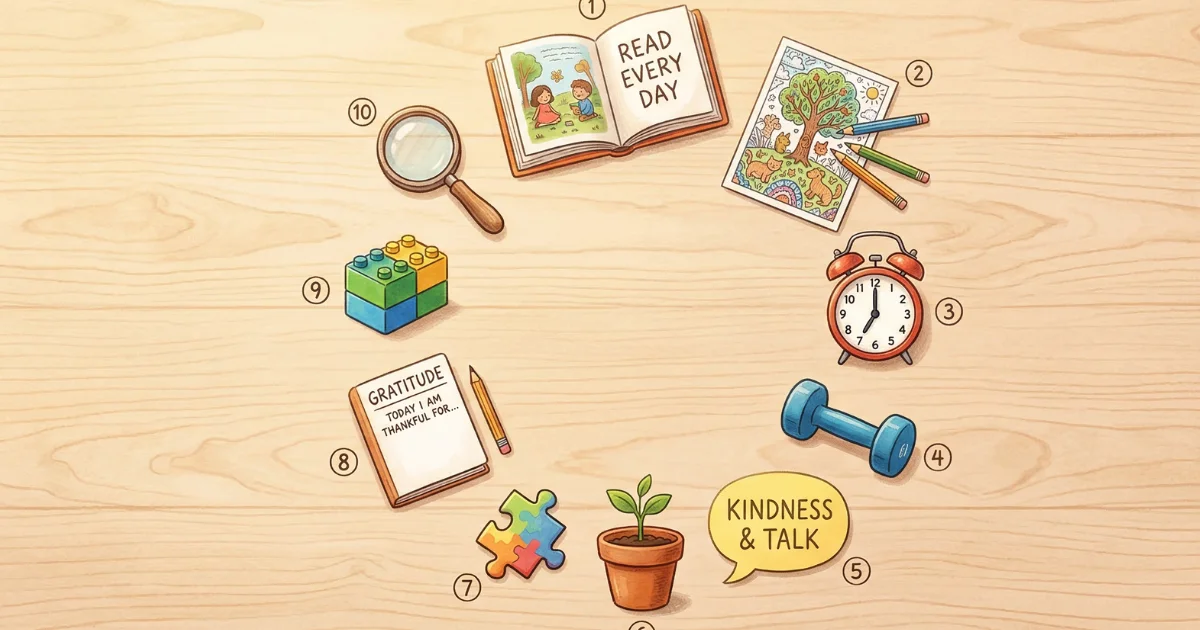
Habit 1 — Read Together Every Day
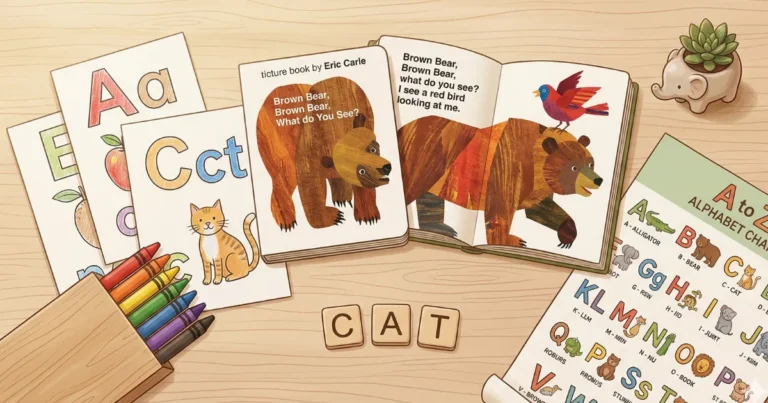
Reading to children is the single most evidence-backed habit for cognitive development available to parents. The research on this is vast and consistent — children who are read to daily develop larger vocabularies, stronger comprehension skills, better memory, greater emotional intelligence, and higher academic achievement than children who are not.
But the benefits go beyond literacy. Reading exposes children to complex sentence structures, diverse vocabulary, different cultural perspectives, and imaginative worlds that expand their capacity for abstract thinking. Every story is a cognitive workout.
How to build this habit: Start with just 10 minutes per day. Bedtime is the most natural time for most families. Choose books that are slightly above your child’s current reading level — this stretches their comprehension and vocabulary more effectively than books that feel easy. Let children choose some of the books — ownership increases engagement.
For older children: Encourage independent reading alongside shared reading. Create a cozy reading space — a comfortable chair, good lighting, a selection of books — and protect 20 minutes of daily reading time without screens.
Habit 2 — Have Real Conversations
The number and quality of words children hear directly shapes their brain development. Research famously found that children from families where adults talk to them frequently and substantively develop significantly larger vocabularies and stronger cognitive skills than children from homes where adult-child conversation is limited.
But it is not just the quantity of words that matters — it is the quality of the conversation. Back and forth conversational exchanges where children are asked questions, listened to carefully, and responded to thoughtfully are particularly powerful for brain development.
How to build this habit: Talk to your child constantly throughout the day — narrate what you are doing, ask open questions, respond with genuine interest to what they say. Dinner time conversation is one of the most powerful cognitive development opportunities in any family’s day — use it intentionally.
Ask open questions daily: Instead of — how was school — try — what is something that surprised you today, what made you laugh, what was the hardest thing you did today. Open questions require longer more complex answers and activate higher order thinking.
Habit 3 — Prioritize Sleep
Sleep is the brain’s maintenance and consolidation period. During sleep the brain processes the day’s experiences, consolidates new memories, clears metabolic waste, and prepares for the next day’s learning. Children who consistently get adequate sleep perform significantly better on every measure of cognitive function — memory, attention, problem solving, creativity, and emotional regulation.
Sleep deprivation even mild and chronic has a measurable negative impact on children’s cognitive performance. A child who is consistently getting one hour less sleep than they need is operating at a significant cognitive disadvantage every single day.
Age appropriate sleep recommendations: Toddlers aged 1 to 2 need 11 to 14 hours including naps. Preschoolers aged 3 to 5 need 10 to 13 hours. School age children aged 6 to 12 need 9 to 12 hours. Teenagers need 8 to 10 hours.
How to build this habit: Establish a consistent bedtime and wake time — even on weekends. Create a calming bedtime routine — bath, quiet reading, coloring, or another calm screen-free activity — that signals to the brain that sleep is coming.
Habit 4 — Encourage Creative Play and Making
Creative activities — drawing, coloring, building, sculpting, storytelling, imaginative play — are among the most cognitively rich experiences available to children. They develop spatial reasoning, problem solving, fine motor skills, creative thinking, emotional processing, and the executive function skills that underpin all learning.
Coloring pages in particular combine multiple cognitive benefits simultaneously — sustained attention, fine motor control, color recognition, creative decision making, and the satisfaction of completing a task. Regular coloring is a simple habit with surprisingly broad cognitive benefits.
How to build this habit: Keep creative materials accessible at all times — a creative corner stocked with coloring pages, pencils, paper, and craft supplies makes creative activity the natural default when children have free time.
Do not direct the creative process: The cognitive benefits of creative play come specifically from child-directed activity. When adults direct and control the creative process the child loses the executive function workout that makes creative play so valuable.
Habit 5 — Limit and Curate Screen Time
Not all screen time is equal and not all screen time is harmful. But excessive passive screen consumption — particularly fast paced entertainment content — has measurable negative effects on children’s attention spans, sleep quality, language development, and capacity for self-directed creative thinking.
The key is intentionality. Curated high quality educational content used in moderation alongside rich real-world experiences is very different from unlimited passive entertainment consumption.
How to build this habit: Set clear consistent daily limits on screen time. Prioritize active over passive screen use — creating something, video calling a grandparent, or watching a documentary about something your child is curious about are all more cognitively valuable than passive entertainment viewing.
Replace screen time with creative activities: The most effective way to reduce screen time is not restriction but replacement — providing engaging screen-free alternatives that children genuinely enjoy. A well-stocked creative corner, a selection of coloring pages, a building toy, and good books are the most reliable screen time replacements.
Habit 6 — Physical Exercise Every Day
The connection between physical activity and brain development is one of the most robust findings in developmental neuroscience. Exercise increases blood flow to the brain, promotes the growth of new neurons, improves mood and reduces anxiety, and enhances memory, attention, and executive function.
Children who exercise regularly perform better academically, have better working memory, demonstrate stronger attention and focus, and show greater creativity than sedentary children. Physical activity is not separate from cognitive development — it is one of its most powerful drivers.
How to build this habit: Children need at least 60 minutes of moderate to vigorous physical activity per day. This does not need to be structured sport — active play, dancing, cycling, swimming, and outdoor exploration all count. Make movement a normal part of every day rather than a special occasion.
Habit 7 — Teach Through Questions Not Answers
One of the most powerful cognitive development habits available to parents is also one of the simplest — when your child asks a question respond with a question rather than an immediate answer.
When a child asks — why is the sky blue — instead of answering immediately try — that is a great question, what do you think? This simple shift activates the child’s own thinking rather than making them a passive recipient of information. It builds the habit of wondering, hypothesizing, and reasoning that is the foundation of scientific and creative thinking.
How to build this habit: Make it a game — when your child asks a question always ask them what they think first. Then explore the answer together. Use phrases like — let us find out, what clues can we use to figure this out, what would happen if your idea was right.
Habit 8 — Practice Gratitude Daily
This habit surprises many parents — but the research on gratitude and cognitive development is compelling. Children who practice daily gratitude develop stronger positive emotions, greater resilience, better social relationships, and higher academic motivation than children who do not.
Gratitude also builds the habit of positive attention — noticing and naming good things — which is a cognitive skill with broad applications in learning, creativity, and problem solving.
How to build this habit: At dinner or bedtime ask each family member to share one thing they are grateful for from the day. Keep it simple and consistent. The habit builds over time and the cognitive and emotional benefits compound.
Habit 9 — Expose Children to Many Different Experiences
Cognitive development is driven by novelty. New experiences create new neural connections. Children who are exposed to a wide variety of experiences — different places, people, activities, foods, music, art forms, and ideas — develop richer and more flexible cognitive networks than children whose experience is narrow and repetitive.
This does not require expensive travel or elaborate activities. A visit to a different neighborhood, a new type of food, a musical instrument they have not tried before, a book about a culture different from their own — all of these are novelty experiences that stimulate cognitive growth.
How to build this habit: Introduce one new experience per week — however small. A new recipe, a new route to school, a new book genre, a new creative activity. Consistency of novelty is what builds cognitive flexibility over time.
Habit 10 — Model a Love of Learning
The most powerful cognitive development habit on this list requires nothing from your child — it requires something from you. Children learn how to relate to learning by watching the adults around them.
A parent who reads for pleasure, who asks curious questions about the world, who tries new things and learns from mistakes, who expresses genuine enthusiasm about discovering something new — that parent is giving their child the most valuable cognitive gift possible. The belief that learning is enjoyable, lifelong, and worthwhile.
How to build this habit: Share your own learning with your child. Tell them about something you learned today. Ask them to teach you something they know that you do not. Express genuine curiosity about things you do not understand. Let them see you reading, creating, and learning with pleasure.
Frequently Asked Questions
At what age should I start these habits? From birth. Every habit on this list is adaptable for every age from newborn to teenager. The earlier you begin the longer the compounding effect has to work — but it is never too late to start.
Which habit makes the biggest difference? Reading together daily has the strongest and most consistent evidence base of any single cognitive development habit. If you can only implement one habit from this list make it daily reading.
Do these habits work for children with learning differences? Yes. Children with dyslexia, ADHD, autism, and other learning differences benefit from all of these habits — and in many cases benefit even more significantly than neurotypical children because these habits build the foundational skills and supportive environments that learning differences most require.
How long before I see results? Some benefits — improved mood, better sleep, more creative engagement — appear within days or weeks. Cognitive benefits like improved vocabulary, stronger attention, and better academic performance build gradually over months and years of consistent habit practice.
— Lina, Daily Coloring Pages