Top 5 coloring pencil brands for kids in 2026 — Best Picks for Every Budget
Table of Contents
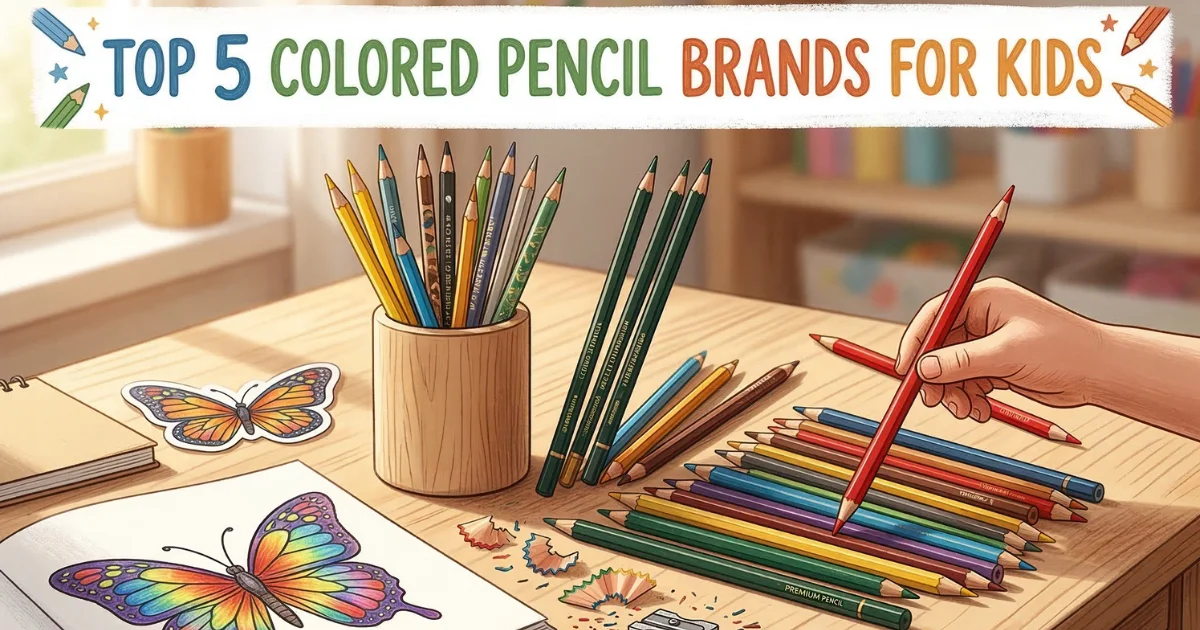
Top 5 Coloring Pencil Brands for Kids in 2026 — Best Picks for Every Budget
If you have ever stood in a stationery aisle or scrolled through an online store staring at dozens of colored pencil sets wondering which one to choose — you are not alone. There are hundreds of options out there and the difference between a great set and a disappointing one can completely change how much a child enjoys coloring.
The right colored pencils make colors vibrant and smooth. They sharpen without breaking. They feel comfortable in small hands. They last long enough to be worth the investment. The wrong ones scratch the paper, snap every time you sharpen them, and produce dull washed out colors that kill a child’s enthusiasm.
In this guide we have done the research for you. Here are the top 5 colored pencil brands for kids in 2026 — covering every budget from pocket money friendly to premium — so you can find exactly the right set for your child.
What to Look for in Colored Pencils for Kids
Before we dive into the top picks here are the key factors to consider when choosing colored pencils for children:
Pigment quality: The pigment is the color itself. High quality pigment produces rich vibrant colors that look beautiful on paper. Low quality pigment produces pale washed out results that can frustrate children and discourage them from coloring.
Core thickness: The core is the colored part inside the pencil. Thicker cores are more durable and harder to break — ideal for younger children who press hard. Thinner cores allow more precise detailed coloring — better for older children and teens.
Breakage resistance: Nothing is more frustrating than a colored pencil that snaps the moment you sharpen it. Look for pencils with bonded cores — the color core is glued to the wood casing which dramatically reduces breakage.
Wood quality: Good quality smooth cedar wood sharpens cleanly and evenly. Poor quality wood splinters and tears when sharpened causing the core to crack and break.
Ergonomics: Triangular shaped pencils are easier for young children to grip correctly. Round pencils roll off desks. Hexagonal pencils are the classic shape and work well for most ages.
Color range: More colors is not always better for young children — too many choices can be overwhelming. A 12 or 24 set is perfect for younger children. Older children and teens benefit from 36 to 48 colors.
Safety: Always check that pencils are certified non-toxic especially for children under 5. Look for EN71 or ASTM certification on the packaging.
The Top 5 Colored Pencil Brands for Kids in 2026
1. Crayola Colored Pencils — Best for Young Children and Beginners
Price range: Budget friendly Best age: 3 to 10 years Available sets: 12, 24, 36, 50, 100 colors
Crayola is the brand that most of us grew up with and for good reason. It remains one of the best options for young children in 2026 — reliable, affordable, widely available, and genuinely enjoyable to use.
What makes Crayola great for kids: Crayola colored pencils have thick cores that resist breaking under the heavy pressure young children naturally apply. The colors are vibrant and consistent across the range. They sharpen well with a standard pencil sharpener and the wood casing is smooth and clean. The grip is comfortable for small hands and the hexagonal shape prevents rolling.
The pigment quality is not the highest on this list but for children aged 3 to 10 who are still developing their coloring skills and pressing hard on the paper Crayola delivers excellent results at a price that makes sense.
Best set to buy: The Crayola 24 count set is the sweet spot for most children — enough colors to be exciting without being overwhelming. For older children who want more variety the 50 count set offers excellent value.
Pros:
- Very affordable — excellent value for money
- Thick break resistant cores ideal for young children
- Vibrant colors that produce beautiful results
- Widely available in stores and online
- Non-toxic and child safe certification
Cons:
- Not ideal for advanced blending techniques
- Colors can look slightly waxy compared to premium brands
- The 100 count set can be overwhelming for young children
2. Faber-Castell Grip Colored Pencils — Best for Ages 6 to 12
Price range: Mid range Best age: 6 to 14 years Available sets: 12, 18, 24, 36, 48 colors
Faber-Castell is one of the most respected names in art supplies worldwide and their Grip colored pencils are specifically designed with children in mind. The result is a pencil that feels professional but is perfectly suited to young colorists.
What makes Faber-Castell Grip great for kids: The defining feature of the Grip colored pencils is the innovative triangular shape with soft grip zones — small raised dots that cover the grip area of the pencil making it much easier to hold correctly. This ergonomic design is particularly beneficial for children who are still developing their pencil grip and for children with fine motor challenges.
The pigment quality is significantly better than Crayola — colors are richer, more vibrant, and blend more smoothly. The cores are bonded to the wood casing making them highly break resistant despite being slightly thinner than Crayola cores. They sharpen beautifully and hold a point well.
Best set to buy: The Faber-Castell Grip 24 color set is the ideal starting point for children aged 6 to 10. The 36 color set is perfect for older children and early teens who want more color options.
Pros:
- Innovative triangular grip design helps children hold pencils correctly
- Excellent pigment quality — vibrant rich colors
- Highly break resistant bonded cores
- Beautiful smooth sharpening
- Great for developing blending skills
- Non-toxic and CE certified
Cons:
- More expensive than Crayola
- Triangular shape may feel unusual to children used to round or hexagonal pencils
- Slightly harder to find in physical stores than Crayola
3. Staedtler Noris Colored Pencils — Best Value for Quality
Price range: Mid range budget friendly Best age: 5 to 14 years Available sets: 12, 24, 36, 48 colors
Staedtler Noris colored pencils offer an exceptional combination of quality and affordability that makes them one of the best overall choices for children of most ages. They are the pencils that many art teachers recommend as the ideal everyday workhorse set.
What makes Staedtler Noris great for kids: Staedtler pencils are made from sustainably sourced wood which is smooth and sharpens cleanly without splintering. The cores use a special break resistant technology that makes them significantly more durable than standard colored pencils. The pigment quality sits comfortably between Crayola and the premium brands — better than Crayola for color richness and blending but at a price that is still very accessible.
The classic yellow and black Noris design is immediately recognizable and the pencils feel well balanced and comfortable in the hand. They are available in a wide range of set sizes making it easy to find the right option for any age.
Best set to buy: The Staedtler Noris 24 color set represents outstanding value and is the ideal everyday set for most children. The 36 color set is excellent for children aged 10 and up who are developing more serious coloring skills.
Pros:
- Outstanding value — very competitive price for the quality
- Break resistant technology significantly reduces core breakage
- Good pigment quality — noticeably better than budget options
- Sustainably sourced wood
- Smooth clean sharpening
- Wide availability worldwide
Cons:
- Not as ergonomically designed as Faber-Castell Grip
- Colors are not quite as rich as premium brands
- Limited advanced blending capability compared to Prismacolor
4. Faber-Castell Polychromos — Best Premium Option for Older Kids and Teens
Price range: Premium Best age: 12 years and up Available sets: 12, 24, 36, 60, 72, 120 colors
When a child or teen is serious about coloring and art the Faber-Castell Polychromos colored pencils are one of the finest tools available at any price. These are professional grade artist pencils that produce results that genuinely look like artwork.
What makes Polychromos special: Polychromos pencils use an oil based pigment rather than the wax based pigment found in most colored pencils. This makes a significant practical difference — they do not leave a waxy residue, they blend beautifully with almost no effort, they layer smoothly without ever going shiny or waxy, and they are highly lightfast meaning the colors do not fade over time.
The color range is extraordinary — up to 120 colors — with multiple shades of each hue allowing for incredibly nuanced and realistic coloring results. The cores are thick enough to be durable but fine enough for detailed work. They sharpen to a precise point and hold it well.
These are not for very young children — the thinner cores and higher price make them best suited to teens aged 12 and up who are genuinely passionate about coloring and art.
Best set to buy: The Polychromos 36 color set is the ideal entry point — enough colors for serious work without the overwhelming investment of the larger sets. The 60 color set is the sweet spot for teens who color regularly.
Pros:
- Professional grade oil based pigment — stunning color quality
- Exceptional blending capability
- No wax bloom — colors stay fresh and vibrant
- Highly lightfast — colors do not fade
- Precise sharpening — holds a fine point well
- The gold standard for serious teen and adult colorists
Cons:
- Significantly more expensive than other options on this list
- Not suitable for young children
- Oil based cores require slightly more pressure to get full saturation
- Investment level requires commitment to the hobby
5. Prismacolor Scholar — Best Step-Up Pencils for Growing Artists
Price range: Mid range to premium Best age: 10 years and up Available sets: 24, 48, 60 colors
Prismacolor is one of the most beloved colored pencil brands among adult colorists and their Scholar range brings that quality down to a more accessible price point making it perfect for older children and teens who are ready to step up from basic pencils.
What makes Prismacolor Scholar great: Prismacolor Scholar pencils have thick soft wax based cores that deposit color richly and smoothly with very little pressure. The colors are vivid and saturated — significantly more vibrant than mid range brands. They blend beautifully using the burnishing technique and the circular blending method producing smooth professional gradients.
The thick soft core means they sharpen down faster than harder pencils but for the quality of color they produce this is a reasonable trade off. They feel luxurious to use — the color flows onto the paper effortlessly which makes coloring sessions feel genuinely indulgent.
For a child aged 10 or older who has outgrown their basic pencil set and wants results that match their growing skill level Prismacolor Scholar is the perfect upgrade.
Best set to buy: The Prismacolor Scholar 24 color set is the ideal starting point. The 48 color set is excellent for older children and teens who color frequently and want a broader color palette.
Pros:
- Thick soft cores deposit color richly and smoothly
- Excellent blending capability — great for learning blending techniques
- Vivid saturated colors that produce beautiful results
- Softer feel than Faber-Castell — many children prefer the effortless color deposit
- Great bridge between mid range and professional grade pencils
Cons:
- Softer cores wear down faster requiring more frequent sharpening
- More expensive than Crayola and Staedtler
- Softer cores can be more prone to breakage if dropped
- Not as lightfast as Faber-Castell Polychromos
Quick Comparison Table
| Brand | Price | Best Age | Core Type | Best For |
|---|---|---|---|---|
| Crayola | Budget | 3–10 years | Thick wax | Young beginners |
| Faber-Castell Grip | Mid range | 6–14 years | Medium bonded | Ergonomic grip |
| Staedtler Noris | Mid budget | 5–14 years | Medium break resistant | Best value |
| Faber-Castell Polychromos | Premium | 12+ years | Oil based | Serious teen artists |
| Prismacolor Scholar | Mid premium | 10+ years | Thick soft wax | Step up blending |
Which Brand is Right for Your Child
Choose Crayola if: Your child is under 10, just starting out with coloring, presses very hard on their pencils, or you need an affordable set that produces good results without a big investment.
Choose Faber-Castell Grip if: Your child is between 6 and 12, you want to encourage correct pencil grip, or your child has fine motor challenges and needs extra grip support. Also an excellent choice for school use.
Choose Staedtler Noris if: You want the best quality to price ratio on this list. These are the pencils that give you noticeably better quality than budget options without paying premium prices. Great for children aged 5 and up.
Choose Faber-Castell Polychromos if: Your child is 12 or older, genuinely passionate about coloring and art, and ready for professional grade tools. These are an investment that will last for years and produce results that will genuinely impress.
Choose Prismacolor Scholar if: Your child is 10 or older and ready to step up from basic pencils. The rich soft color deposit and excellent blending capability make coloring feel effortless and the results are noticeably more beautiful than mid range options.
How to Make Colored Pencils Last Longer
Good colored pencils are an investment and with a little care they can last a very long time. Here are some practical tips:
Sharpen correctly: Always use a quality pencil sharpener — either a good manual sharpener or an electric sharpener with a gentle setting. Never use a knife to sharpen colored pencils as this can crack the core. Sharpen with slow steady turns rather than fast aggressive sharpening.
Store them properly: Keep colored pencils in a case or roll when not in use. Storing them loose in a drawer leads to cores cracking from the impact of rolling around. A simple pencil case is enough.
Avoid dropping: Colored pencil cores are delicate and crack internally when dropped even if the wood casing shows no visible damage. A cracked core will break repeatedly when sharpened. Handle pencils gently especially premium ones.
Use a light touch: Pressing too hard uses up more pigment faster and fills the paper texture making it impossible to add more layers. Light pressure extends the life of the pencil and actually produces better results.
Frequently Asked Questions
What is the best colored pencil brand for a 5 year old? Crayola is the best choice for 5 year olds. The thick break resistant cores handle the heavy pressure young children apply, the colors are vibrant and fun, and the price makes sense for this age group.
Are expensive colored pencils worth it for children? For young children under 10 — no. Crayola or Staedtler produce results that are completely appropriate for their skill level. For older children and teens aged 12 and up who are genuinely passionate about coloring, investing in Faber-Castell Polychromos or Prismacolor Scholar produces a noticeable improvement in results and enjoyment.
How many colors does a child need? For children aged 3 to 6 a 12 color set is plenty. Children aged 6 to 10 are well served by a 24 color set. Older children and teens benefit from 36 to 48 colors. More than 48 colors is generally only useful for serious artists.
What is the difference between wax based and oil based colored pencils? Wax based pencils are softer, deposit color more easily, and are better for blending but can develop a white waxy bloom on dark colors over time. Oil based pencils like Faber-Castell Polychromos are slightly harder, require a little more pressure, but produce more lightfast results with no wax bloom and exceptional layering capability.
Can colored pencils be used on printer paper? Yes but the results are not ideal. Printer paper has a rough surface texture that makes smooth coloring and blending more difficult. For better results use smooth cartridge paper or dedicated coloring paper. The difference is immediately noticeable.
The right pencils make all the difference. Happy coloring. 🎨
— Lina, Daily Coloring Pages